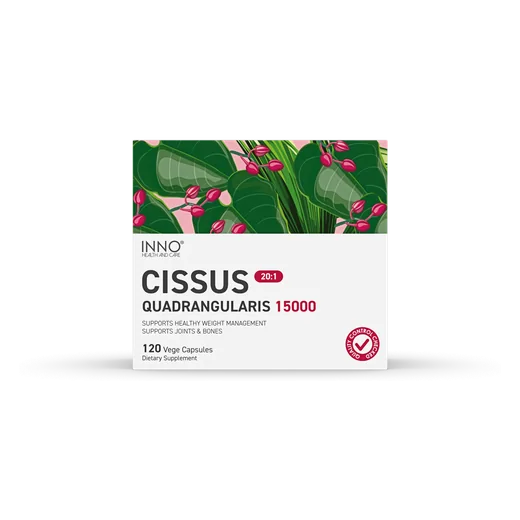
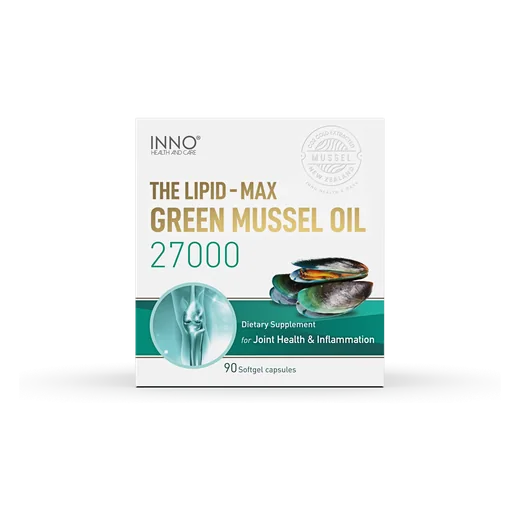
Published research on this product’s key ingredients, summarised by ingredient. Every study can be checked on PubMed.
What it is
An ingredient made by powdering, or extracting the lipids from, the green-lipped mussel (Perna canaliculus), farmed only in New Zealand coastal waters. The lipid extract (oil) contains not only EPA and DHA but also lipids characteristic of this mussel, such as eicosatetraenoic acid (ETA), furan fatty acids and sterols.
How it works
Green-lipped mussel lipids supply omega-3 fatty acids to cell membranes, while characteristic components such as ETA have been studied for modulating both the cyclooxygenase (COX) and lipoxygenase (LOX) pathways, contributing to the balance of inflammatory mediator production. The whole powder also contains chondroitin-type glycosaminoglycans, proteins and minerals. Human studies indicate that the form taken (oil, powder, whole mussel) affects how quickly and how much EPA and DHA reach the blood. This lipid mediator modulation forms the background for research on joint comfort and post-exercise recovery markers.
What studies report
- A systematic review that examined 9 clinical trials in adults with joint discomfort and pooled 5 of them found that green-lipped mussel extract (lipid extract or whole powder) showed a moderate effect size on the visual analogue scale (VAS) for pain (−0.46) and was generally well tolerated.
- In a randomised, placebo-controlled study of 32 men with little exercise experience, those who took 1,200 mg/day of a green-lipped mussel lipid blend (PCSO-524) for 26 days before downhill running showed smaller rises in muscle damage markers (CK, myoglobin, troponin I) and TNF-α, and less delayed-onset muscle soreness, than the placebo group.
- A randomised crossover study of 8 healthy men comparing oil, powder, food ingredient and whole mussel forms found that the oil reached peak blood omega-3 levels fastest (about 5 hours), while DHA exposure was similar across all four forms.
- In a 12-week double-blind study of 80 adults with moderate or greater hip or knee joint discomfort, there was no difference in pain scores versus placebo, but an improvement was observed in joint stiffness scores.
💡 Avoid it if you have a shellfish or crustacean allergy. If you take medication related to blood clotting, it is advisable to consult a professional.
- meta-analysisAbshirini M et al. Green-lipped (greenshell™) mussel (Perna canaliculus) extract supplementation in treatment of osteoarthritis: a systematic review. Inflammopharmacology. 2021. PMID 33738701
- RCTMickleborough TD et al. The effects PCSO-524®, a patented marine oil lipid and omega-3 PUFA blend derived from the New Zealand green lipped mussel (Perna canaliculus), on indirect markers of muscle damage and inflammation after muscle damaging exercise in untrained men: a randomized, placebo controlled trial. J Int Soc Sports Nutr. 2015. PMID 25722660
- RCTMiller MR et al. Bioavailability of Orally Administered Active Lipid Compounds from four Different Greenshell™ Mussel Formats. Mar Drugs. 2020. PMID 33114125
- RCTStebbings S et al. A randomized double-blind placebo-controlled trial to investigate the effectiveness and safety of a novel green-lipped mussel extract -BioLex® -for managing pain in moderate to severe osteoarthritis of the hip and knee. BMC Complement Altern Med. 2017. PMID 28830491
What it is
A plant polyphenol ingredient made by water extraction of the bark of New Zealand radiata pine (Pinus radiata). On a dry powder basis it contains over 80% proanthocyanidins, along with taxifolin (1–2%) and other flavonoids and phenolic acids.
How it works
Its main constituents, proanthocyanidins (oligomers of linked catechin and epicatechin units), are known to scavenge free radicals directly and regenerate vitamin C, supporting the body's antioxidant network. Studies have looked at its relationship to the nitric oxide (NO) production environment in vascular endothelial cells, and cell experiments observed reduced expression of endothelial adhesion molecules and reduced monocyte migration in response to TNF-α stimulation. Test-tube studies have also reported lowered activity of carbohydrate-digesting enzymes (α-amylase, α-glucosidase), so its relationship to post-meal metabolic responses is being studied. These antioxidant and vascular mechanisms form the background for research on blood flow to the brain and cognitive function markers.
What studies report
- In a 5-week double-blind controlled study of 42 men aged 50–65 with a body mass index of 25 or more, the Enzogenol + vitamin C group showed faster response times on spatial working memory and immediate recognition tasks, while the vitamin C-only group showed no change. There were no changes in blood safety markers.
- In a study randomising 44 adult smokers to Enzogenol 480 mg + vitamin C or vitamin C alone for 12 weeks, vascular dilation response (FMD) improved similarly in both groups, but the protein oxidation marker (protein carbonyl) was significantly lower in the Enzogenol group, and lower fibrinogen levels were observed in heavier smokers.
- In a crossover study in which 25 healthy adults took placebo and Enzogenol 50 mg and 400 mg before oral glucose tolerance tests, people with a single-peak glucose curve showed a lower post-meal incremental glucose area (iAUC) and lower peak glucose than with placebo.
- Composition and toxicity studies of the ingredient reported no abnormal findings with repeated dosing in animals, and no adverse changes in liver or kidney function or haematological markers in humans taking 480 mg/day for 6 months or 960 mg/day for 5 weeks.
💡 It is advisable to consult a professional before use if you are pregnant or breastfeeding or take medication related to blood clotting. Results and how you feel may vary between individuals.
- RCTPipingas A et al. Improved cognitive performance after dietary supplementation with a Pinus radiata bark extract formulation. Phytother Res. 2008. PMID 18683195
- RCTYoung JM et al. Comparative effects of enzogenol and vitamin C supplementation versus vitamin C alone on endothelial function and biochemical markers of oxidative stress and inflammation in chronic smokers. Free Radic Res. 2006. PMID 16298763
- clinical studyLim WXJ et al. An Acute, Placebo-Controlled, Single-Blind, Crossover, Dose-Response, Exploratory Study to Assess the Effects of New Zealand Pine Bark Extract (Enzogenol(®)) on Glycaemic Responses in Healthy Participants. Nutrients. 2020. PMID 32075228
- clinical studyFrevel MA et al. Production, composition and toxicology studies of Enzogenol® Pinus radiata bark extract. Food Chem Toxicol. 2012. PMID 22982471
What it is
Vitamin D3 (cholecalciferol) is a fat-soluble vitamin synthesised in the skin on exposure to sunlight (UVB) and also obtained from foods such as fish and eggs. Blood levels tend to be low in people who spend much of their time indoors or live with little sunlight.
How it works
Ingested D3 is converted in the liver to 25-hydroxyvitamin D [25(OH)D], which serves as the blood status marker, and then to the active form (1,25-dihydroxyvitamin D) in the kidneys and elsewhere. The active form binds to the vitamin D receptor (VDR) and regulates the expression of genes related to calcium and phosphorus absorption in the gut. VDR is also present in immune and muscle cells, and research has examined its role in immune function, such as production of the antimicrobial peptide cathelicidin, and in muscle function.
What studies report
- A meta-analysis of randomised controlled studies directly comparing D2 and D3 found that D3 raised blood 25(OH)D concentrations more effectively than D2 (with the difference especially clear for large single doses).
- An individual participant data meta-analysis of 25 randomised, double-blind, placebo-controlled studies (11,321 participants) reported an odds ratio of 0.88 for acute respiratory symptoms in vitamin D groups, with clearer differences for daily or weekly intake and larger differences in people with low baseline levels.
- A meta-analysis of 54 randomised, placebo-controlled studies (8,747 participants) found that vitamin D did not improve muscle strength or physical performance markers, and some markers were even slightly less favourable. Evidence on muscle function markers is inconsistent.
💡 Being fat-soluble, it can accumulate in the body if excessive amounts are taken over a long period, so keep to the recommended intake. If you tend toward high blood calcium, have a history of kidney stones, or take diuretics or heart medication, consult a professional.
- meta-analysisTripkovic L et al. Comparison of vitamin D2 and vitamin D3 supplementation in raising serum 25-hydroxyvitamin D status: a systematic review and meta-analysis Am J Clin Nutr. 2012. PMID 22552031
- meta-analysisMartineau AR et al. Vitamin D supplementation to prevent acute respiratory tract infections: systematic review and meta-analysis of individual participant data BMJ. 2017. PMID 28202713
- meta-analysisBislev LS et al. Vitamin D and Muscle Health: A Systematic Review and Meta-analysis of Randomized Placebo-Controlled Trials J Bone Miner Res. 2021. PMID 34405916
These summaries describe published research on raw materials; subjects, doses and durations may differ from this product. They do not guarantee the effect of any individual product or imply diagnosis, treatment or prevention of disease.